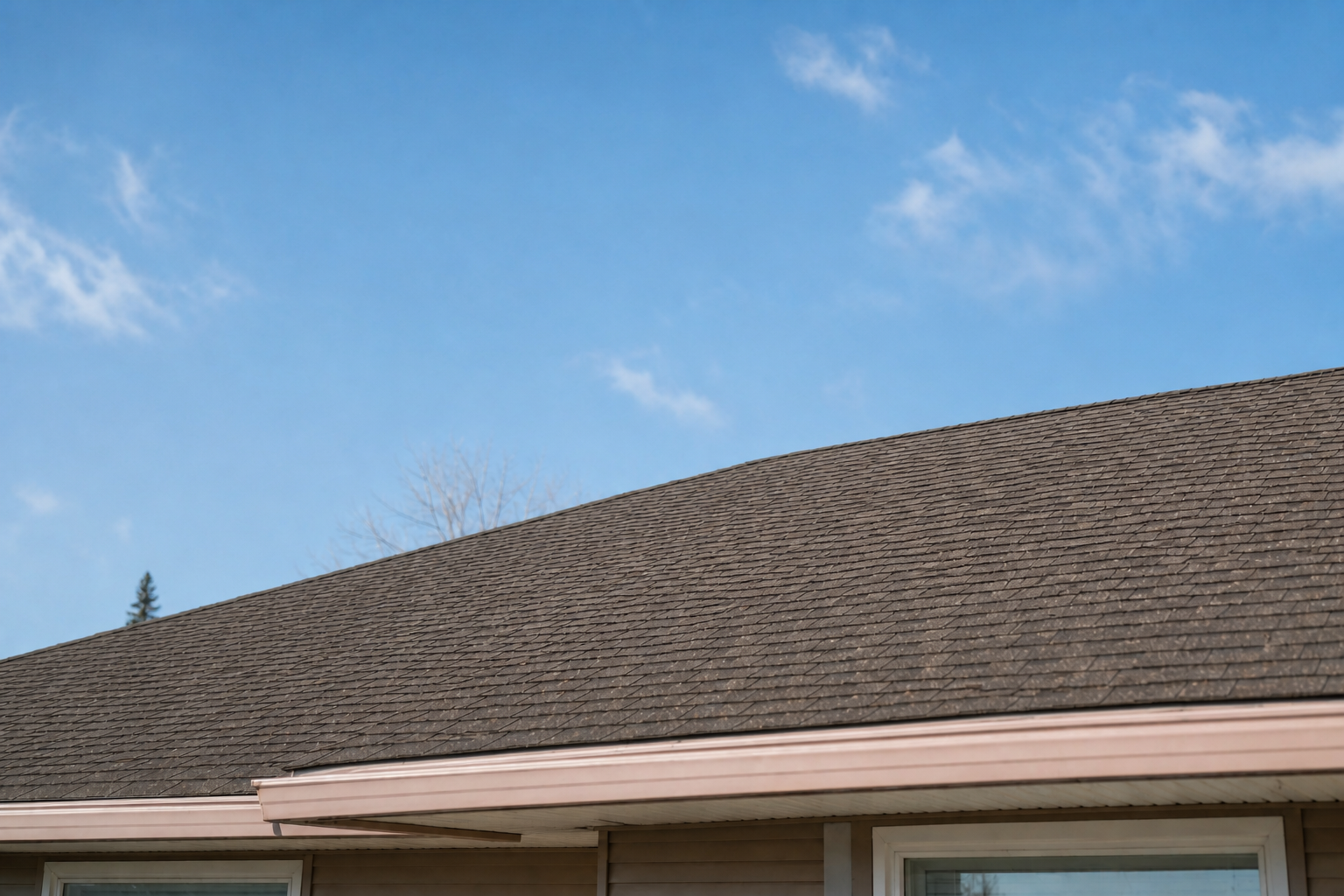
Tear-off instead of a second layer
Laying new shingles directly over an old layer is technically allowed in some cases, but it hides decking problems, adds weight the frame was not designed to carry twice, and shortens the life of the new shingles because they cannot sit flat. We tear off to the deck on every replacement so the sheathing can be inspected properly and any soft or rotten sections swapped out before anything new goes on.
Homes built before the seventies around Bellefonte and the older boroughs sometimes have plank decking with gaps between the boards, which usually needs a layer of plywood over it so the new shingles have solid nailing to bite into.
The layers underneath the shingles
Drip edge goes on at the eaves first, followed by ice-and-water membrane along the eaves and in every valley, which matters more here than in most parts of the state because of how often this county sees a freeze-thaw cycle. Synthetic underlayment covers the rest of the deck, drip edge goes on again at the rakes over that underlayment, and a starter strip runs along both edges so the first course of shingles seals properly against wind.
Step flashing and counter-flashing go in at every wall and chimney intersection, and a ridge vent with matching caps finishes the top. Each layer solves a specific failure mode, and skipping one to save an hour on the schedule tends to cost years off the roof.
Choosing shingles for this climate
Architectural shingles are the standard choice for homes in this region because they carry a higher wind rating than basic three-tab shingles and hide small unevenness in an older deck better. Most carry a wind rating well above what a typical Centre County storm delivers, provided they are nailed in the correct zone with the full number of fasteners, which is where a rushed installation usually falls short.
On roofs that have already taken a hail hit once, an impact-rated shingle is worth pricing alongside the standard option, even though it costs more up front.
Ventilation as part of the replacement
A tear-off is the right moment to fix attic ventilation, and it is often overlooked. A continuous ridge vent paired with clear soffit intake keeps air moving through the attic space, which lowers summer attic temperatures and reduces the winter condensation that drips onto insulation and stains ceilings from above. Old box vents and gable vents that fight against the new ridge vent get removed or sealed off so the system draws air the way it was designed to.
Timeline and scheduling around weather
A typical house is stripped, dried in and shingled inside one to two days, and we never leave more roof open overnight than can be dried in the same day. During the spring storm stretch the schedule shifts around the forecast rather than a fixed date, and you hear about any change before the crew is due, not after.